


Wicked: For Good, the sequel to last year’s Wicked, has made $400 million in two weeks. My daughters and I account for $73.50 of that box office haul.
Yes, I saw the movie at an early screening fan event, thank you very much, and yes, I also get its appeal. The story takes one of our most iconic villains - the Wicked Witch of the West from The Wizard of Oz - and completely recontextualizes her. It’s catnip for anyone who’s ever felt misunderstood, anyone who’s questioned official narratives, anyone who suspects that the people in power might be lying about who the real villains are.
And the recontextualization works because of what it reveals: Elphaba isn’t actually wicked. She’s principled, gifted, and dangerous to the Wizard’s corrupt regime. He can’t control her, so he destroys her reputation instead. By the end, we see that the “villain” of our childhood was actually the hero all along, and the beloved Wizard - the one Dorothy trusted, the one we all trusted - was the real monster. Jeff Goldblum, how could you!
It’s genuinely smart storytelling. It teaches us to question surface-level morality, to look at who benefits from calling someone evil, to recognize that those in power often demonize the people who threaten them. These aren’t bad lessons. They’re actually necessary ones.
But Wicked doesn’t actually make an evil person sympathetic. It reveals that the villain was never villainous at all. Elphaba was framed. That’s revealing innocence. What came after wasn’t about revealing innocence but rather it was about creating it.
Because the source material, the 1995 book by Gregory Macguire on which the film is based on and then the musical by Stephen Schwartz and Winnie Holzman in 2003, opened a door that an entire industry walked through. Disney saw the blueprint and ran with it.
2014’s Maleficent starring a horny Angelina Jolie took Sleeping Beauty’s villain and gave her a trauma backstory. She wasn’t evil. She was betrayed by Stefan, the man she loved, who drugged her and cut off her wings to steal her kingdom. Her curse on Stefan’s daughter Aurora wasn’t malice; it was pain manifesting as revenge. By the end, she’s the one who saves the princess with true love’s kiss because she’s learned to love again.
In 2021’s Cruella, Emma Stone took it even further. Remember the woman who wanted to skin 101 dalmatian puppies for a coat? Turns out she witnessed her mother’s death as a child, was gaslit about it, and developed a punk rock fashion aesthetic as a response to trauma. The puppies? Don’t worry about the puppies. That’s the other Cruella. This Cruella is just misunderstood and stylish.
Notice the shift: Wicked revealed innocence. These movies are creating innocence through backstory. They’re taking actual villains, characters who did actually villainous things, and retrofitting trauma explanations until the villainy disappears.
And it’s not just Disney movies for kids. Marvel’s Infinity War gave us Thanos, whose plan to eliminate half of all life in the universe to solve resource scarcity became the subject of actual internet debate. “Thanos was right” wasn’t just a meme - people genuinely argued his position. He watched his home planet Titan destroy itself through overpopulation. He’s trying to prevent universal suffering. His logic is Malthusian, utilitarian, concerned with the greater good. Vice Magazine published an actual explainer asking whether his methods were justified.
The trauma backstory - watching Titan fall - made people negotiate with genocide. Not everywhere, not everyone, but enough that “Thanos was right” became a thing you’d see argued on Reddit, in YouTube videos, in actual think pieces. Once you understand why someone wants to commit mass murder, some people start treating the mass murder as... not exactly right, but understandable. Sympathetic. Worth debating.
That’s the move. Once you understand someone’s pain, you start negotiating with their monstrousness.
The trend doesn’t stop at family entertainment. Netflix has built an entire business model around it.
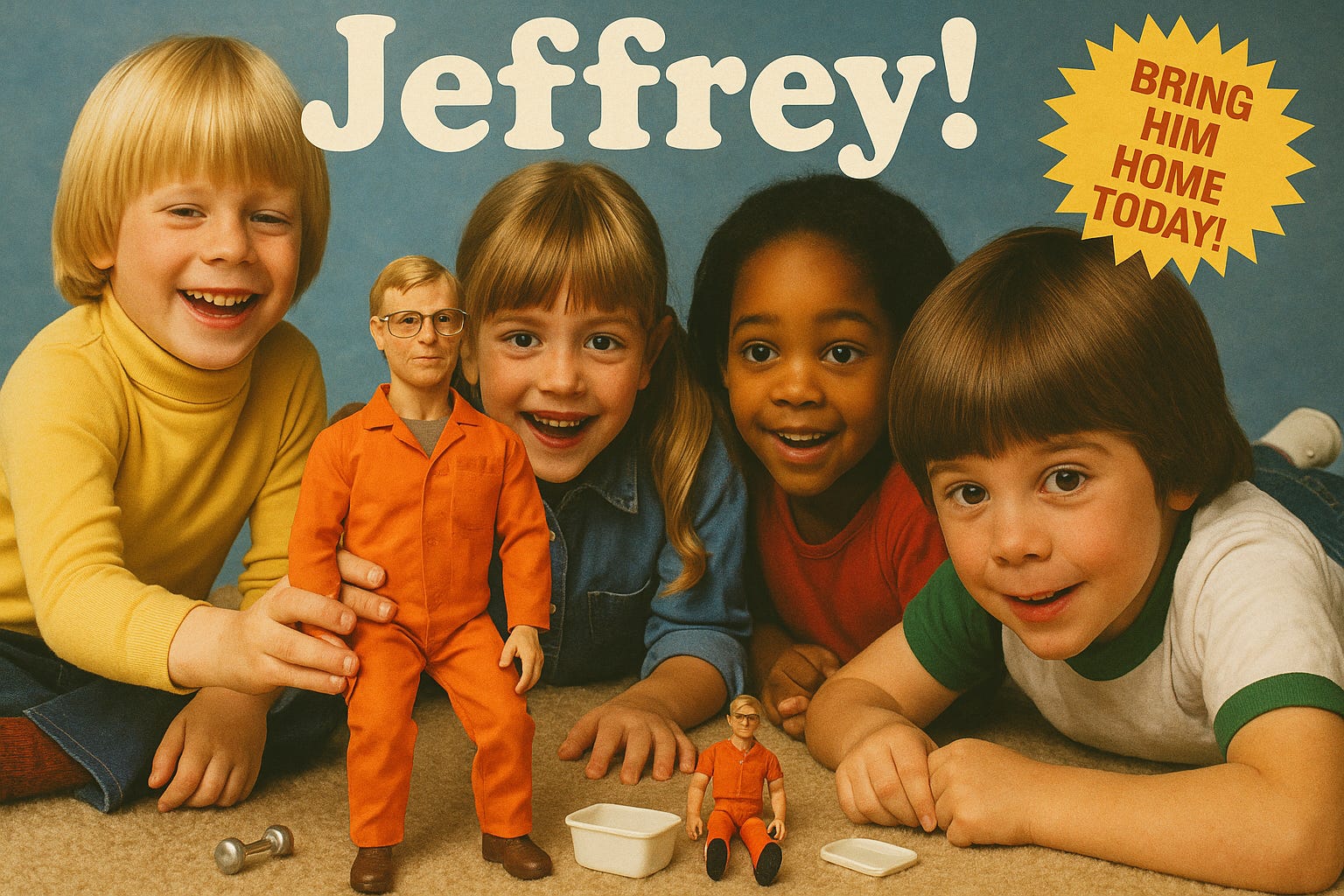
Ryan Murphy’s Dahmer became one of Netflix’s most-watched series ever. Ten hours of Evan Peters showing you Jeffrey Dahmer’s childhood trauma, his abandonment issues, his sexuality crisis. By episode four, you’re not thinking about the seventeen people he murdered. You’re thinking about his lonely childhood, the moment he “broke.” The show’s titled Monster, but what it actually does is make the monster relatable.
The Ed Gein series just aired, following the same formula. And Murphy’s already in production on the next season: Lizzie Borden. The success rate tells you everything - these shows don’t just perform well, they dominate. Because we’ve been trained to want the backstory more than we want the crime. We want to understand the killer more than we want to honor the killed.
This isn’t sensationalism. Sensationalism creates distance. What these shows do is close it. They engineer empathy for people who committed atrocities. And we binge them, ten hours at a time, training ourselves to look for the wound in the hand that holds the knife.
So why are we so invested in this? Why can’t we just let villains be villains anymore?
Part of it is therapy culture, which has given us genuinely valuable frameworks for understanding behavior. Hurt people hurt people. Trauma responses are real. Understanding someone’s pain helps us respond with compassion instead of pure judgment. These aren’t bad principles. They’ve probably even made us better at supporting people with genuine struggles.
But we’ve extended that logic past its useful boundary. We’ve started to believe that understanding someone’s pain requires absolving their actions. That calling someone’s behavior “bad” without first excavating their entire trauma history is unsophisticated, maybe even cruel. That if we just understood everyone’s backstory deeply enough, we’d see that nobody is actually evil. Rather, they’re all just responding to circumstances.
There’s also our cultural obsession with relatability. We want to see ourselves in every character. A villain who’s just evil feels one-dimensional, unsatisfying, like lazy writing. We want complexity, depth, psychological realism. We want to understand them because understanding feels like sophistication.
And then there’s the moral comfort of it all. If everyone is just responding to their circumstances, then none of us are really responsible for anything. If Cruella is only cruel because of childhood trauma, then I don’t have to examine my own capacity for cruelty. I’m not traumatized in that particular way, so I’m safe from becoming her. If Thanos only wants genocide because he watched his planet die, then I don’t have to confront the reality that some people arrive at monstrous conclusions through seemingly logical paths.
Erasing villainy from our stories is more comfortable than accepting it. And the kids internalizing this concept are also the ones who grow up and turn on the news.
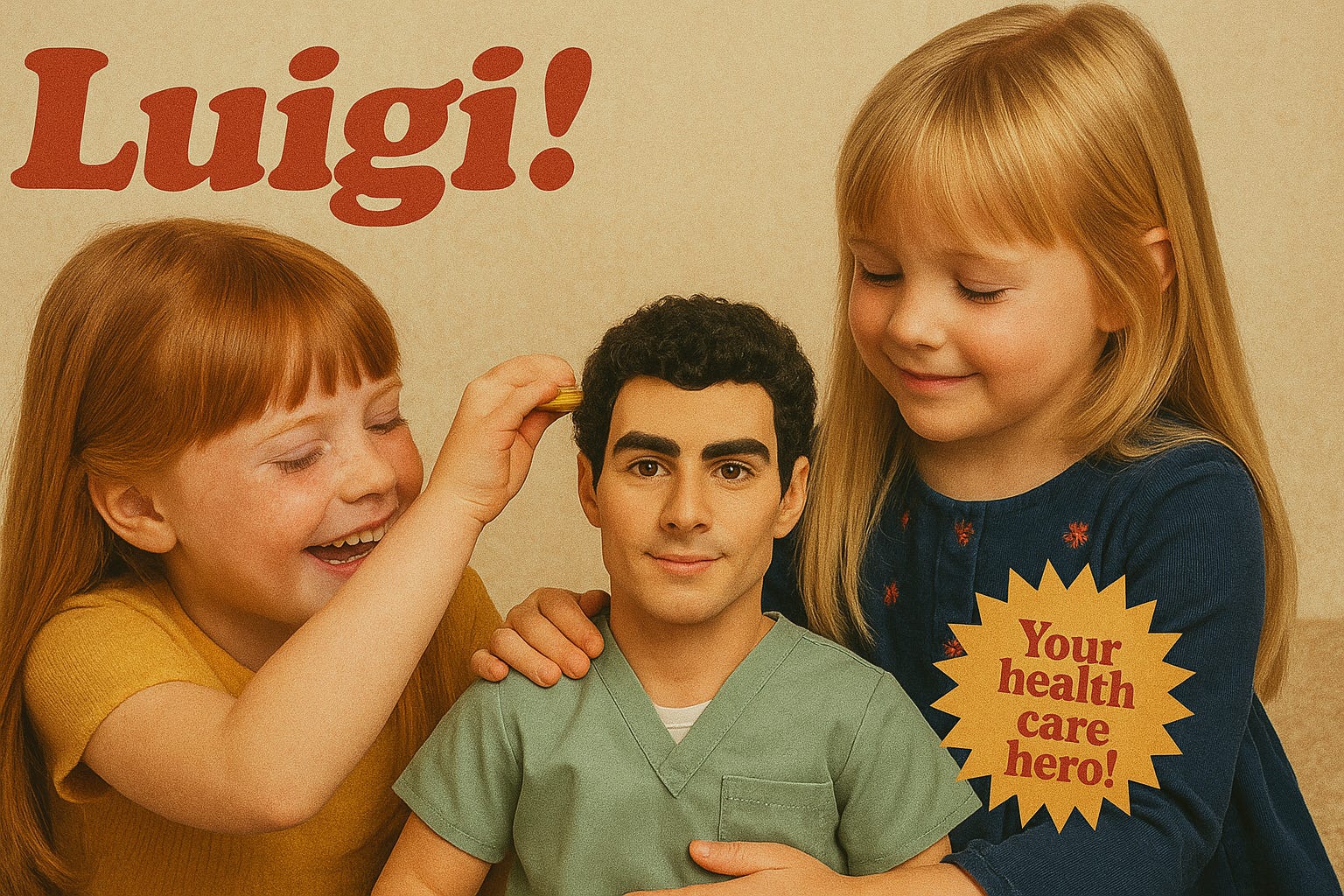
Luigi Mangione shoots a healthcare CEO. Within hours, he’s a folk hero. Hot guy with back pain and a Goodreads account. Social media psychoanalyzes his reading list, writes fan fiction about his motivations, turns him into a sympathetic protagonist. I have a friend who still, to this day, has a picture of “Saint Luigi” as his Facebook profile pic.
This week, NPR covered Rahmanullah Lakanwal, who shot and killed Sarah Beckstrom, a 20-year-old Army specialist from West Virginia. The headline: “Afghan suspect in D.C. National Guard attack appeared to suffer personal crisis.” The article explains that Lakanwal “spent most of his time in his darkened bedroom, not speaking to anyone, not even his wife and older kids.” A volunteer (not a healthcare professional, they note) believes Lakanwal is “suffering from both PTSD and from his work with the US military in Afghanistan.”
Sarah Beckstrom’s name appears later in the article. The framing leads with Lakanwal’s suffering.
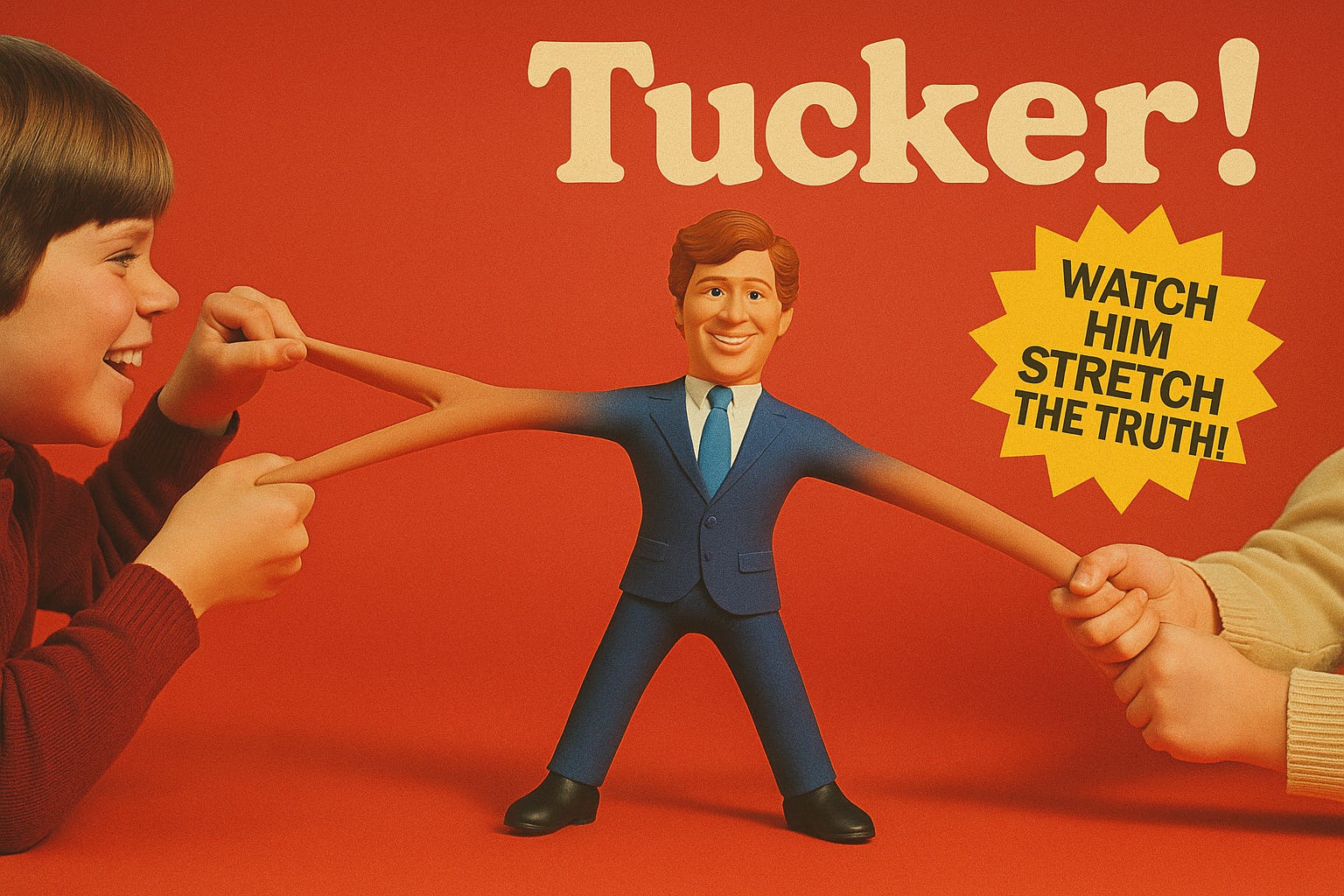
Tucker Carlson sat down with podcaster Daryl Cooper last year who spent two hours arguing that Winston Churchill was the real villain of World War II. Hitler, in this telling, was just responding to the Treaty of Versailles, to economic devastation, to German humiliation. He didn’t want war with Britain but Churchill forced his hand. The Holocaust gets mentioned briefly, uncomfortably, then the conversation moves back to Churchill’s real crimes.
This is where the logic leads. If everyone is just responding to their circumstances, if understanding requires sympathy, if context is the same as justification, then you can rehabilitate anyone. Even Hitler. Especially Hitler, actually, because the worse the villain, the more compelling the recontextualization.
Once you’ve accepted that Cruella wasn’t really cruel and Thanos had a point, what intellectual framework do you have left to say that some people are just... bad? That some actions are simply evil, regardless of backstory? But when we erase villainy from fiction, we lose the safe space to practice moral clarity before reality forces us to handle moral complexity.
Previous generations had villains who stayed villains. Scar killed Mufasa because he was jealous and power-hungry. Voldemort pursued immortality and supremacy because he was evil. Ursula wanted power. The simplicity wasn’t laziness - it was functional. It gave children a contained space to experience what evil looks like, to feel the fear and anger it provokes, and to experience the catharsis of seeing it defeated.
That catharsis requires the villain to stay villainous. Imagine if at the end of Harry Potter we learned that Voldemort was actually responding to childhood abandonment trauma, that his actions were understandable given his circumstances, that maybe the real villain was the wizarding society that ostracized him. What would that do to seven books worth of moral clarity? It would complicate it in ways that might be interesting for adults already equipped with fully developed moral frameworks, but potentially damaging for kids still learning that some actions are wrong. Full stop.
We need Scar to be purely evil so that when we encounter real people whose cruelty has explanations - trauma, mental illness, systemic oppression - we already know that understanding why doesn’t change what is. Fiction gives us practice holding both thoughts: this person suffered, and this person caused suffering, and both things are true simultaneously.
Elphaba wasn’t wicked. The story revealed that the villain was a lie, that power protects itself by demonizing threats. That’s worth knowing.
But as it turns out, Maleficent was indeed wicked. So was Cruella. And Thanos. And the person who shot Sarah Beckstrom was too, no matter what his personal crisis revealed.
Can we accept that Luigi Mangione was in pain and still condemn the fact that he murdered a father on a sidewalk? Can we recognize that the Afghan shooter suffered and that he also killed someone? Or have we trained ourselves - trained an entire generation - to believe that understanding is justification? That once we know someone’s backstory, we can’t as easily condemn their actions?
Maybe that’s why we can’t stop rewriting villains. It’s more comfortable than accepting that some people do monstrous things. That trauma explains but doesn’t excuse. That understanding why someone became dangerous doesn’t make them less dangerous.
My daughters will leave the theater knowing Elphaba was innocent. That’s fine.
But they also need to know: some people aren’t. Some actions don’t have backstories that transform them into something else. Some things are just wrong.
In a world where everyone is just responding to trauma, where understanding equals justification, we lose the ability to say: this was wrong. This person is responsible. This cannot be excused.
Maybe erasing villainy from our fiction is preparation for erasing accountability from our reality. Maybe teaching kids that every villain just needs understanding is teaching them that no one is ever really to blame.
Elphaba defied gravity. But gravity is real. And so is evil. Pretending otherwise doesn’t make anyone safer. It just trains us to meet evil with curiosity instead of recognition, to ask ‘but why?’ when we should be screaming ‘stop.’”


